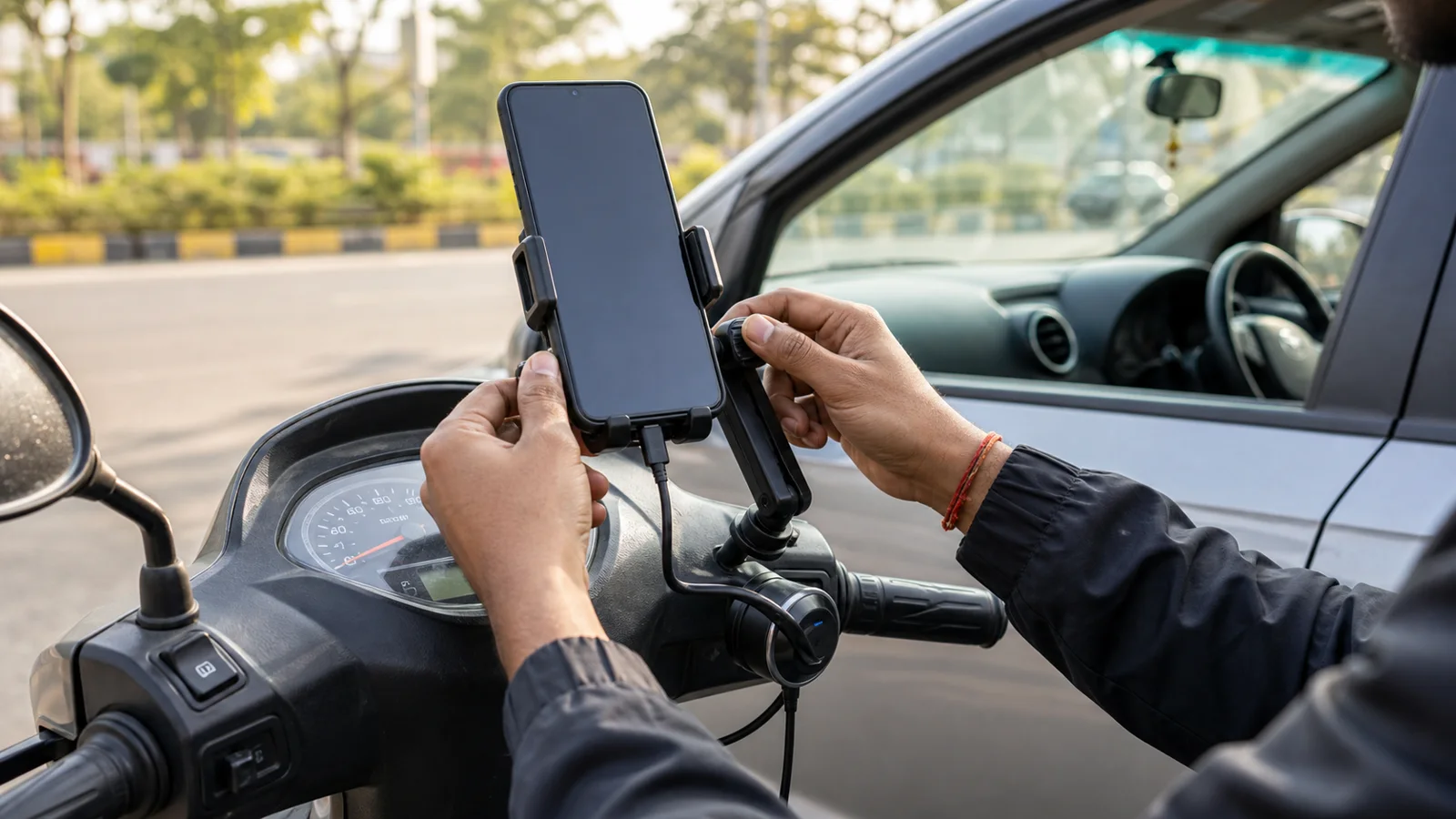
A good phone mount and charger are the most underrated tools for an app-based driver. You can have the fastest phone and the best data plan, but if the screen keeps falling off the dashboard or the battery dies at 6 p.m., your earnings take a hit. The good news is that you do not need expensive gear. You need gear that matches Indian road conditions.
Start with where you mount it
The mount should sit at eye level without blocking your view of the road. For cars, the windshield or air vent are common spots. For two-wheelers, the handlebar mount is standard. Wherever you place it, the screen should be readable in direct sunlight. If you have to lean forward or squint, the mount is in the wrong place.
Avoid mounts that stick with weak adhesive. Summer heat in Indian cities melts cheap glue. Suction cups with a locking lever usually hold better, and metal or spring-loaded clamps grip the phone more securely than magnetic pads when the road gets bumpy.
Grip matters more than looks
Dashboard mounts look neat in photos, but they transfer every vibration from the engine straight to your phone. Over months, this can damage the camera stabilizer or loosen internal connections. Look for mounts with a dampening joint or rubber padding.
For bikes and scooters, vibration is even worse. Use a mount that has a rubberized cradle and, if possible, a vibration damper. Some riders also wrap a thin rubber band around the phone for extra security on rough roads.
Charging speed vs cable quality
A fast charger is useless if the cable is loose. Buy one thick cable with reinforced ends. Thin cables break near the connector within weeks. If your car supports it, a dual-port car charger lets you charge your phone and a power bank at the same time.
For two-wheelers, a USB charger wired directly to the battery is more reliable than a cigarette-lighter adapter. Get it installed by someone who understands your vehicle's wiring. A poorly installed charger can drain the battery when the vehicle is parked.
The power bank question
A 10,000 mAh power bank is enough for most full-day shifts. Keep it in a shaded pocket or bag. Lithium batteries hate heat, and leaving a power bank on the dashboard can reduce its life quickly. Charge it every night. Do not wait for it to die completely before recharging.
Some drivers prefer two smaller power banks instead of one large one. It spreads the heat and gives you a backup if one fails.
Budget tips that actually work
You do not need to buy the most expensive brand. Read reviews from delivery riders and drivers specifically, not just general users. Look for words like "survived monsoon," "still tight after six months," or "does not wobble at speed." Those are the reviews that matter.
Buy an extra cable and keep it wrapped in the vehicle. Cables fail at the worst possible time, usually during surge pricing. Having a backup saves both money and stress.
Maintenance is part of the purchase
Once a week, clean the mount's suction cup and the back of your phone case. Dust reduces grip. Check the cable for fraying. Tighten any screws on the handlebar mount. These two-minute checks extend the life of your gear by months.
Buy for vibration, not for showroom looks
The best mount is not always the one with the most stylish photo. Daily driving means potholes, speed breakers, sudden braking, dust, heat, and people brushing past the vehicle at stands. A mount should grip from more than one side, keep the phone stable in portrait mode, and allow the charging cable to sit naturally without bending. If the mount shakes when you tap the screen at a standstill, it will be worse on the road.
Cable quality matters more than cable length
A cheap cable can make a good charger look weak. For long shifts, use a short, thick cable that fits tightly and does not hang near the handlebar or gear area. Loose cables create two problems: slow charging and distraction. Keep one spare cable in the vehicle because a broken cable during peak demand can turn a profitable hour into a battery-saving exercise.
Think about heat before fast charging
Fast charging is useful, but Indian summer heat can make phones throttle or shut down. If the phone sits in direct sun, move the mount slightly, use shade when parked, and avoid running too many background apps. A phone that stays cool and charges steadily is better than a phone that charges fast for ten minutes and then overheats.
Test the setup while parked
Before using new gear during a full shift, test it for one local route while parked at stops. Check whether the screen is readable, the charging cable stays firm, and the mount blocks mirrors or controls. Good gear should disappear into the routine. If you notice it all day, something is wrong.
Final thought
The strongest drivers do not rely on luck alone. They build small habits, keep the phone setup clean, and review what the shift actually taught them. Auto Accept App is there to support that workflow, while the final decision always stays with the person on the road.
FAQ
Is a magnetic mount good for drivers?
It can work in a car, but bike and scooter riders should be careful because vibration and road shocks can loosen weak magnets.
Do I need an expensive charger?
Not necessarily. You need a reliable charger with stable output, good cable fit, and protection from overheating.
Where should the phone be mounted?
Mount it where you can glance while parked without blocking mirrors, controls, or your view of the road.