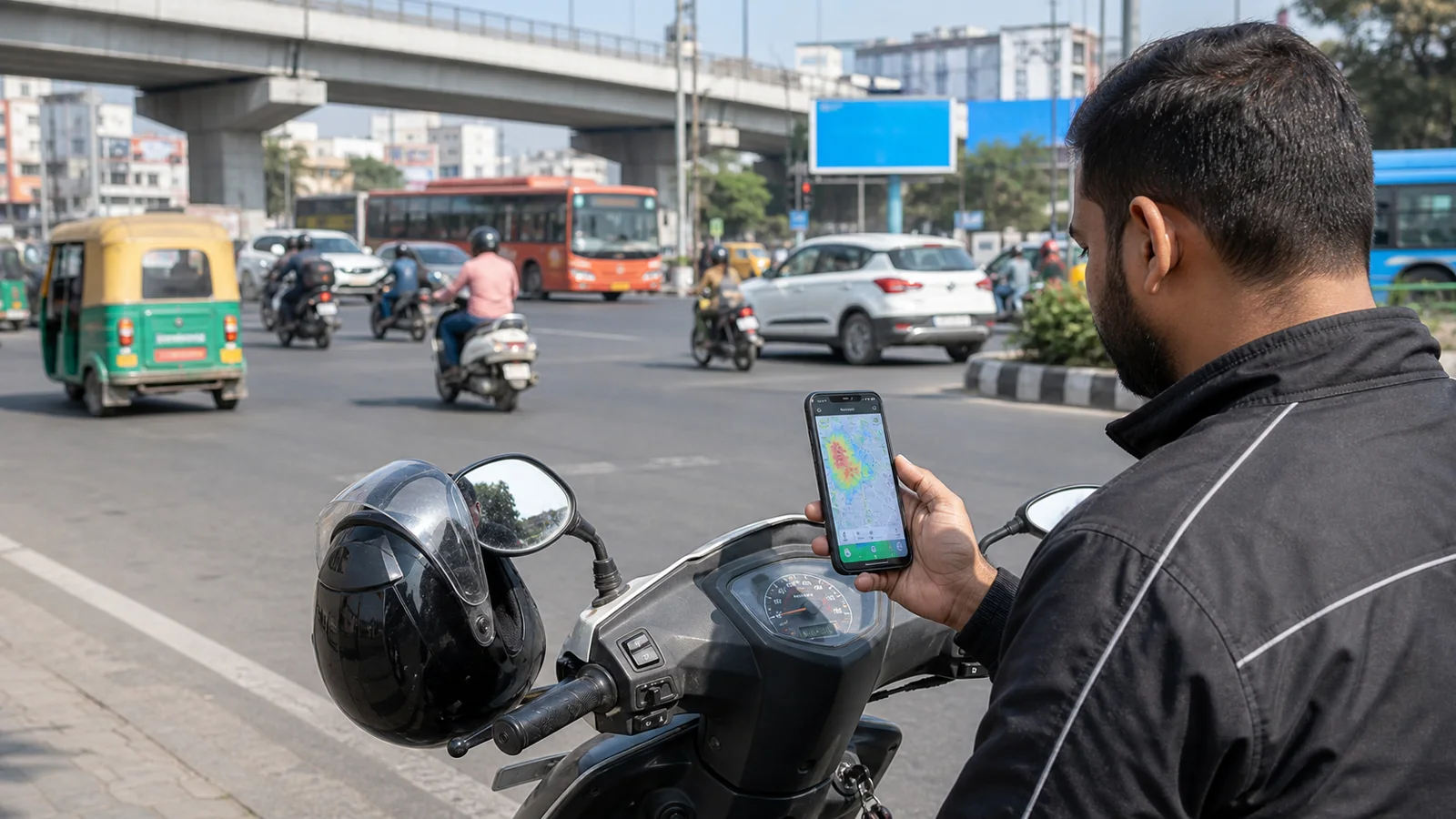
Most drivers understand routes. Fewer drivers understand patterns. A route tells you how to get from point A to point B. A pattern tells you why point A is busy at 8 a.m. and dead at 11 a.m., or why the same crossroads behaves differently on Monday and Saturday. Learning to read these patterns is one of the fastest ways to improve your hourly earnings without working more hours.
Think in flows, not places
Cities move in flows. In the morning, people travel from residential areas to business districts, railway stations, and airports. In the evening, the flow reverses. Around lunchtime, food delivery flows from restaurants to offices. On weekends, the flow shifts to malls, markets, and entertainment areas.
If you position yourself at the source of a flow, you get more requests. If you sit at the destination waiting for the next trip, you may wait longer. The best drivers follow the flow rather than chasing individual pings.
Watch the clock, not just the map
Every city has its own rhythm, but some patterns repeat almost everywhere. Office areas peak between 8 and 10 a.m. and again between 5 and 8 p.m. Railway stations have steady demand around train arrivals. Schools create short spikes in the afternoon. Hospitals and clinics generate trips throughout the day.
Start noting the times when you get good requests in each area. After two weeks, you will have a rough mental schedule. After two months, it becomes instinct.
Use traffic, do not fight it
Heavy traffic is frustrating, but it also creates demand. Passengers avoid buses and autos during jams. Delivery orders spike because people do not want to step out. The trick is to be in the right lane of traffic, not stuck in it.
Learn the parallel roads that locals use. Often, a road one block away moves twice as fast as the main route during peak hours. Your map app may not show this in real time, but local knowledge does.
Identify dead zones quickly
A dead zone is an area where you wait too long between requests. Some dead zones are permanent, like industrial areas after shift hours. Others are temporary, like a market street that empties after 2 p.m. The faster you recognize a dead zone, the less time you waste in it.
If you do not get a request within five to ten minutes of arriving somewhere, consider moving. Waiting rarely makes the situation better. Even driving one kilometer toward a busier area can change your luck.
Rain and events change everything
Rain pushes people toward cabs and food delivery. It also slows you down, so shorter trips become more profitable than long airport runs. Events like cricket matches, festivals, and political rallies create sudden demand pockets. They also create road closures you should avoid.
Follow local news and event pages on social media. A five-minute check in the morning can save you an hour of sitting in traffic later.
Talk to other drivers
Some of the best pattern knowledge comes from tea-stall conversations. Ask drivers who work different hours or platforms what they are seeing. Share what you see. Patterns change when a new mall opens, a metro line starts, or a company changes office timings. The local driver network catches these changes before any algorithm does.
Let data help, not rule
If you use an assistant like Auto Accept App, your shift history shows which apps and times produced the best results for you. Use that data to test your pattern theories. Maybe you earn more on short Swiggy trips on rainy evenings than on long Uber trips. Maybe Tuesdays are slower than Wednesdays in your area. Small insights like these add up.
Separate movement from demand
A road full of vehicles does not always mean a good earning area. Sometimes heavy traffic only means slow trips, angry customers, and fuel waste. Demand is where people are requesting rides or deliveries; traffic is only the condition you must pass through. Good drivers learn to ask both questions: where are requests likely, and how hard will it be to complete them?
Watch exits, not just hotspots
Malls, hospitals, stations, offices, and markets can all create requests, but the exit route decides whether the trip is worth it. If a hotspot sends you into a jam every time, the fare must justify that delay. If a quieter pickup point gives clean exits toward better areas, it may be more profitable than a crowded surge zone.
Use history to test your city logic
Your memory can exaggerate bad days. Shift history gives a calmer picture. Compare time, location, app, fare, waiting time, and route. If evening rides from one area often end in dead zones, avoid that pattern unless the fare is strong. If short delivery blocks near a food cluster regularly beat long cab rides in traffic, plan around that truth.
Move before everyone else moves
The best positioning often happens ten minutes early. If offices close at 6:00, being nearby at 5:50 is better than arriving at 6:15 with everyone else. Traffic reading is partly about anticipation. Learn school timings, prayer timings, market closing hours, train arrivals, and rain patterns. These small local signals can matter more than any generic map color.
Final thought
The strongest drivers do not rely on luck alone. They build small habits, keep the phone setup clean, and review what the shift actually taught them. Auto Accept App is there to support that workflow, while the final decision always stays with the person on the road.
FAQ
Should I always chase surge zones?
No. Surge can be useful, but only when pickup, route, waiting time and exit traffic still make sense.
How many days of history should I compare?
One week is a good start. Two to four weeks gives a clearer pattern if your schedule is regular.
Can traffic reading improve delivery work too?
Yes. Delivery earnings often depend on short routes, parking ease and restaurant wait time, all of which follow local patterns.