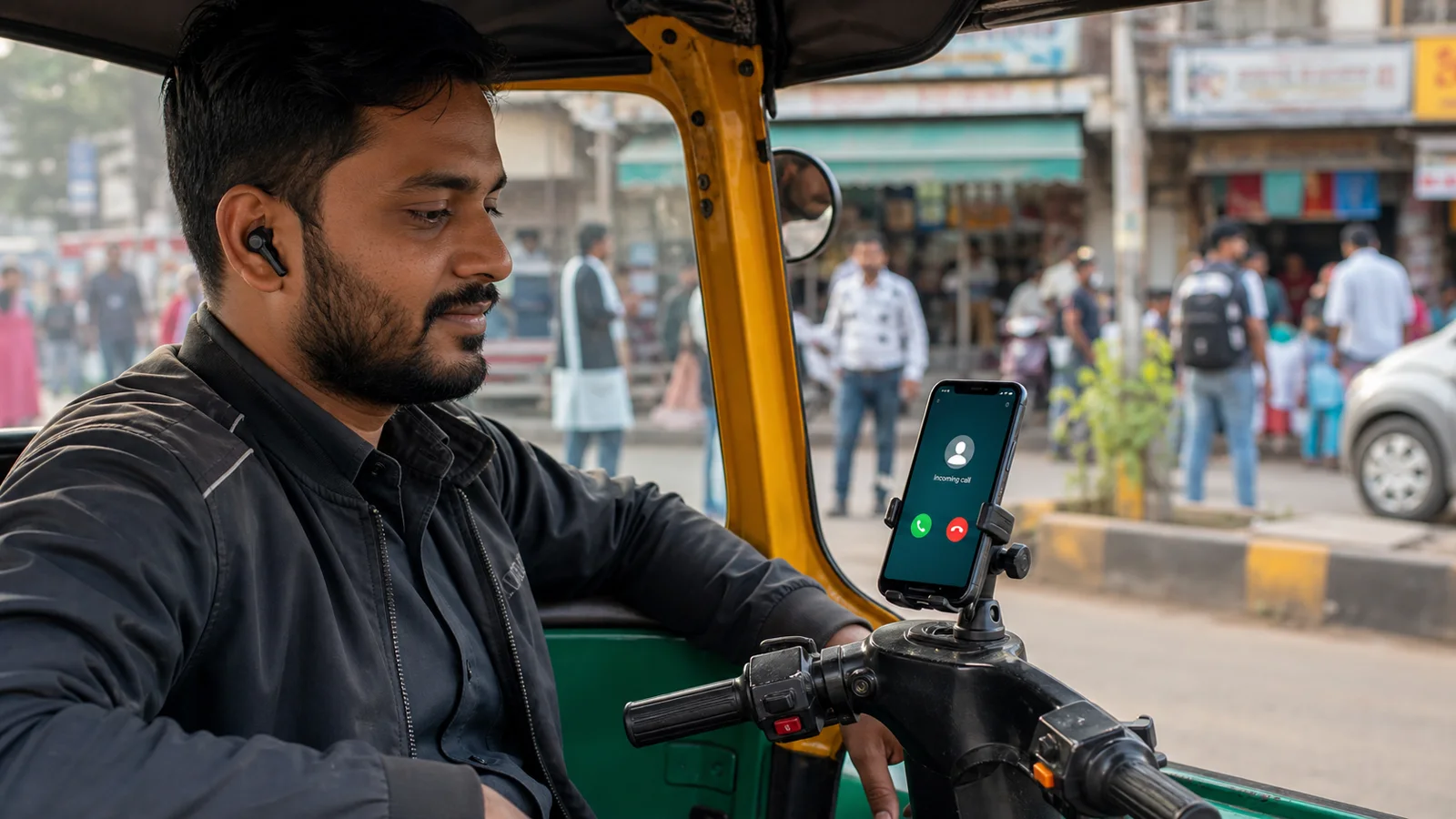
The phone rings just as you enter a busy roundabout. It is your next pickup asking for directions. You want to answer, but your eyes need to stay on the road. This moment happens dozens of times a day for Indian drivers, and how you handle it affects both your safety and your ratings.
Customer calls are part of the job. They help passengers find you, confirm landmarks, and clarify drop points. But they can also pull your attention away from traffic at exactly the wrong moment. The goal is not to avoid calls. It is to make them short, clear, and safe.
Let the call wait until you are stopped
The safest rule is simple: do not answer while moving in heavy traffic. Let the call ring. Find a safe spot to pull over, even if it takes thirty seconds. A short delay is better than an accident or a missed turn.
If your phone is connected to a Bluetooth headset or the vehicle's audio system, answering is easier, but it is still a distraction. Your hands may be free, but your mind is split. Use voice answers only for very short confirmations.
Use short, standard phrases
Prepare a few sentences you use on every call. "I am two minutes away, please wait at the main gate." "I am at the location, are you near the red building?" These phrases are clear, polite, and quick. They reduce the length of the call and the chance of confusion.
Avoid long explanations while driving. If the passenger wants a detailed route discussion, ask them to message you or say you will call back once parked.
Let the app do part of the talking
Most ride and delivery apps now show live location, vehicle number, and estimated arrival time to the customer. Use these features. Send a quick in-app message like "Arriving in 2 minutes" instead of calling. Many passengers prefer messages because they can read them without answering.
If you use Auto Accept App, keep your alert setup active so notifications come through clearly. A missed call often happens because the phone was on silent or the notification did not show.
Set up your phone for one-tap answers
Use a Bluetooth earpiece or car stereo with a physical answer button. Fumbling with the screen while driving is dangerous. If you do not have Bluetooth, set your phone to auto-answer only when connected to a headset, or use voice commands.
Keep the phone mounted at eye level so you can glance at the caller ID. If it is not urgent, let it go to voicemail or call back later.
Handle angry customers calmly
Sometimes a call starts with frustration. The customer is late, the pin is wrong, or the previous driver cancelled. Do not match their energy. Speak slowly, acknowledge the issue, and offer a simple solution. "I understand, I am turning into your lane now." Most people calm down when they feel heard.
If the conversation becomes abusive or unsafe, end it politely and contact support after the ride. Your safety matters more than one trip.
Practice the habit
Safe call management is a habit, not a one-time setting. Remind yourself every morning: stop first, talk second. After a few weeks, it becomes automatic. Your passengers will still reach you. Your ratings will not drop. But your risk of an accident will.
Keep calls short and predictable
A customer call is usually not the place for a long explanation. Use short, calm lines: 'I am at the gate,' 'Please share the landmark,' 'I will call after I park,' or 'I cannot talk while moving.' When you repeat the same phrases, you spend less mental energy and sound more professional.
Pull over for confusion
If the pickup point is unclear, stop safely before solving it. Trying to read landmarks, listen to the customer, check the map, and manage traffic at the same time is too much. A two-minute stop can prevent a wrong turn, a near miss, or an argument. Safe stopping is not wasted time; it is part of the job.
Use app messages when possible
Many situations do not need a voice call. A clear app message such as 'Reached main gate' or 'Please come to pickup point' creates a record and avoids repeating yourself in traffic noise. It also helps when the customer is in a lift, office lobby, or crowded market where calls are hard to hear.
Protect your mood after a difficult call
Some calls will be rude, unclear, or stressful. Do not carry that energy into the next ride. Take a breath, drink water if parked, and reset your tone. The next customer should not receive the frustration from the previous one. Professional drivers survive long shifts by learning to reset quickly.
Set phone rules before the rush
Decide your call rule before the busy hour begins. For example, you may answer only through a headset while parked or moving slowly in a safe lane, and you may stop fully when the customer needs landmark discussion. This removes the pressure to improvise during traffic. A clear rule also helps you explain yourself calmly when someone expects an instant answer.
Final thought
The strongest drivers do not rely on luck alone. They build small habits, keep the phone setup clean, and review what the shift actually taught them. Auto Accept App is there to support that workflow, while the final decision always stays with the person on the road.
FAQ
Is it safe to answer calls while driving?
The safer habit is to use hands-free only for very short replies and pull over when details need attention.
What should I say if a customer keeps calling?
Tell them calmly that you will call back after parking safely. Repeat once if needed.
Can missed calls hurt ratings?
Clear app messages, accurate arrival, and calm communication usually matter more than answering every call instantly.