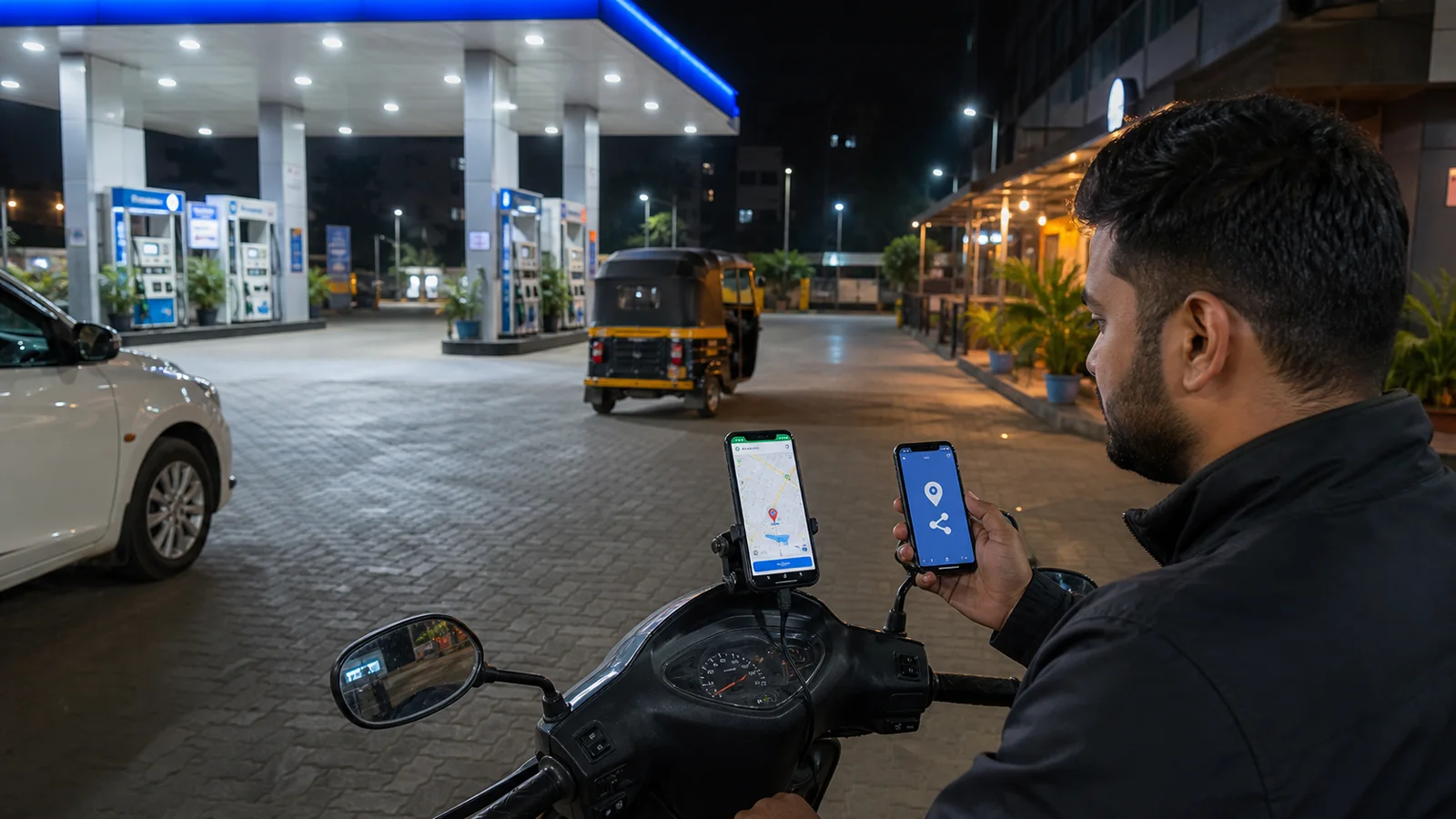
Late-night shifts can be profitable. The roads are clearer, surge pricing often kicks in, and airport runs are more common. But they also come with risks that daytime drivers rarely face. Empty streets, fewer witnesses, tired passengers, and dimly lit pickup points all ask for extra caution.
Safety is not about fear. It is about habits. The right habits make you a harder target and give you more options if something feels wrong. This article shares practical habits that experienced night drivers use without slowing themselves down.
Verify before you unlock
At night, always confirm the passenger's name and destination before they get in. Ask, "What is your name?" and "Where are we going?" A genuine passenger will answer quickly. Someone with bad intentions may hesitate or give a vague answer.
For two-wheeler deliveries, verify the order code at the door. Do not hand over food until you are sure it is the right address. If the location looks suspicious, call the customer and ask them to step into a lit area.
Share your live location
Before starting a night shift, share your live location with a family member or trusted friend. Most phones let you share location for a few hours or until you turn it off. Set it before you go online and forget about it.
Tell someone your rough plan for the night. You do not need to update them every trip. A simple message like "Working north side tonight, back by 2 a.m." is enough.
Stay in well-lit, public areas
When waiting for a pickup at night, park where there are lights and people. Petrol pumps, 24-hour shops, and main road crossings are better than dark residential lanes. If a pickup point looks isolated, call the passenger and ask them to walk to the nearest lit spot.
Trust your instincts. If a location or passenger makes you uncomfortable, cancel the trip. A cancelled ride costs less than a dangerous situation. Your safety rating is not worth your life.
Keep your phone charged and visible
Your phone is your lifeline at night. Keep it charged above 50 percent. Use a mount so you can see navigation without holding it. Set your emergency contacts and know how to dial police or ambulance quickly.
If you use Auto Accept App, make sure alerts and notifications are working before you start. A missed alert is annoying during the day; at night, it can leave you distracted or stranded.
Watch your energy and alertness
Night work is harder on the body than it feels. Drowsy driving is dangerous driving. Take a 10-minute break every two hours. Step out, stretch, drink water, and splash your face if needed. Do not push through heavy eyelids.
Avoid heavy meals during night shifts. They make you sleepy. Choose light snacks and sip water regularly. Caffeine helps, but only in small amounts and not right before you plan to sleep.
Have a cash and document routine
Do not keep all your cash in one place. Split it between your wallet, a hidden pocket, and the vehicle. Keep vehicle documents in a fixed place so you are not fumbling in the dark if asked for them.
At the end of the night, count your earnings in a safe place, not on the roadside. Put the cash away before you start the vehicle home.
Prefer light over shortcut
At night, the safer pickup is often the brighter pickup, even if it adds a minute. Choose fuel stations, hotel entrances, hospital gates, apartment security points, or main-road corners when possible. A dark shortcut may save distance but increase risk, especially when you are tired or unfamiliar with the area.
Confirm before you enter narrow lanes
If the map sends you into a narrow or poorly lit lane, call or message before entering. Ask the customer to come to a visible point if needed. This is not about being difficult; it is about keeping the vehicle movable and keeping yourself visible.
Make fatigue a safety signal
Late-night risk is not only about other people. It is also about your own reaction time. If you miss turns, feel irritated, forget small steps, or stare at the screen too long, take a break. A ten-minute reset can prevent a bad decision in the next half hour.
Keep your phone boringly reliable
Night work is the worst time for permission problems, low battery, or notification failure. Before starting, check battery mode, volume, data, location, and app selection. A reliable phone does not make the night safe by itself, but an unreliable phone makes every small problem harder.
Leave a trail without making noise
A simple routine can protect you without slowing work. Share your broad working area with one trusted person, keep emergency contacts easy to reach, and avoid arguing at isolated pickup points. If something feels wrong, cancel through the proper app process and move back to a visible road. Late-night professionalism is not only about earning; it is about getting home with enough energy to work again.
Final thought
The strongest drivers do not rely on luck alone. They build small habits, keep the phone setup clean, and review what the shift actually taught them. Auto Accept App is there to support that workflow, while the final decision always stays with the person on the road.
FAQ
Should I share my live location at night?
It is a good habit for late shifts, especially when working in unfamiliar areas or after midnight.
What pickup points should I avoid?
Avoid dark isolated lanes, blocked exits, and places where you cannot turn the vehicle easily.
Is late-night work worth it?
It depends on your city, vehicle, health and route knowledge. Track earnings and safety comfort together, not earnings alone.