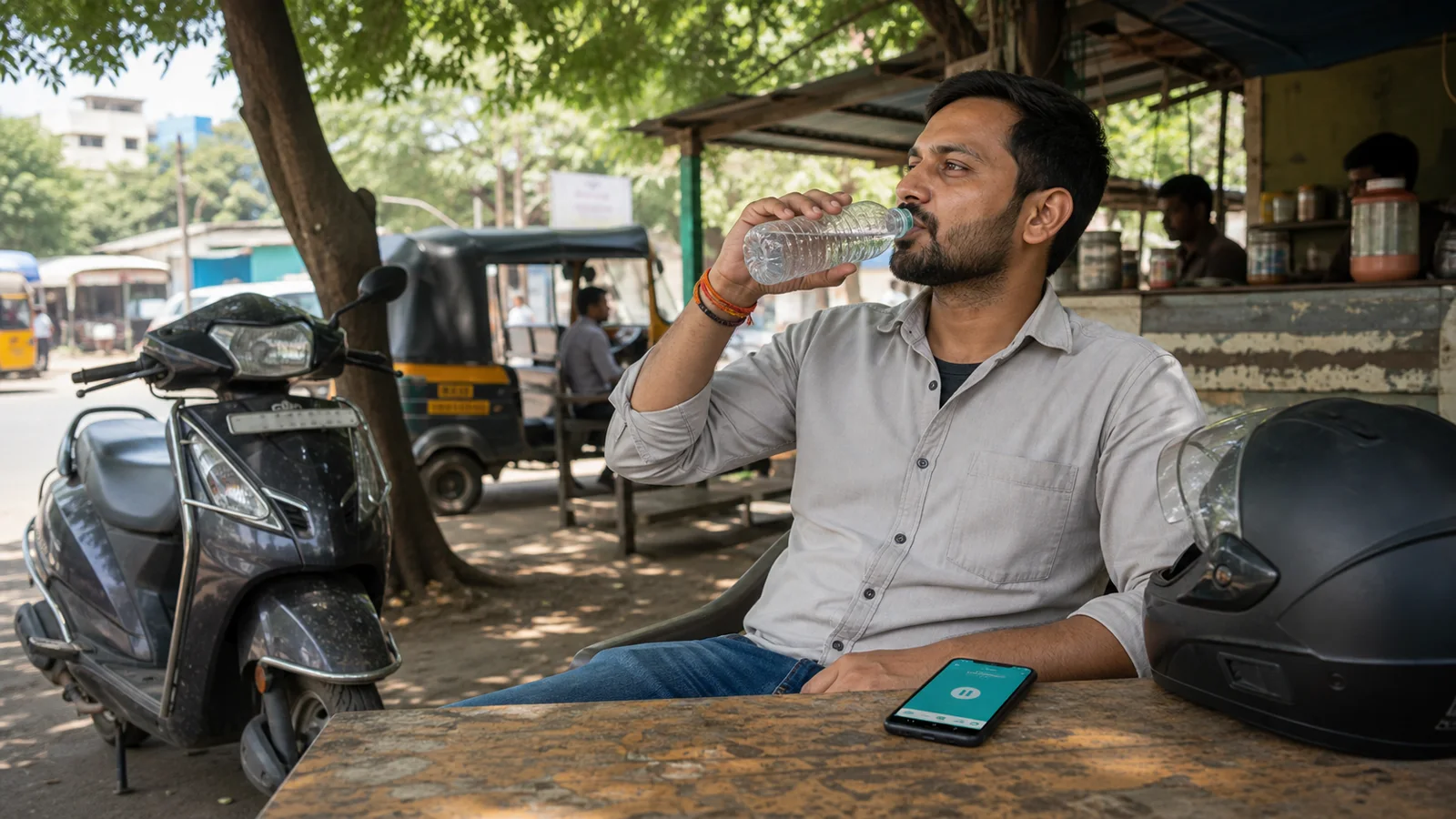
There is a myth among drivers that more hours always mean more money. It is not true. After a certain point, tired drivers make worse decisions. They accept low-value trips, miss turns, react slowly, and risk accidents. A short break can pay for itself by preventing these costly mistakes.
Taking breaks is not laziness. It is strategy. The drivers who earn consistently over months are usually the ones who pace themselves. This article explains when to break, what to do during a break, and how to plan rest around demand.
Break before you feel exhausted
Do not wait until your eyes burn or your back hurts. By then, your reaction time is already slower. A good rule is to take a short break every two hours, even if you feel fine. Ten minutes is enough to reset your mind and stretch your body.
Signs that you need a break include repeated yawning, heavy eyelids, irritation at small things, and difficulty remembering the last few turns. If you notice these, stop immediately.
Time breaks with demand, not against it
The best time to rest is when demand is naturally low. In most Indian cities, late morning and mid-afternoon are quieter than peak hours. A 20-minute break at 11 a.m. costs less than a 20-minute break at 6 p.m.
Watch your local demand pattern for a week. You will find the dead windows. Plan your meals, tea, and rest during those windows. Then you are fresh when surge and busy hours return.
Get out of the vehicle
Sitting in the driver's seat during a break is not a real break. Your body stays in the same posture. Your mind stays in work mode. Step out, walk a little, stretch your legs and back, and let your eyes focus on distant objects.
If you can find a park or a quiet lane, a five-minute walk helps more than twenty minutes of scrolling on your phone. Movement clears the mind.
Eat light and hydrate
Heavy meals make you sleepy. Fried food and large portions slow you down. Choose lighter options when you are planning to drive afterward. A small meal with rice, roti, dal, or eggs works better than a heavy biryani if you still have hours to go.
Drink water regularly. Dehydration causes headaches and fatigue, even before you feel thirsty. Keep a water bottle within reach and sip between trips.
Protect your eyes and back
Staring at small screens and road signs for hours strains your eyes. During breaks, look at green trees or distant buildings. Blink slowly a few times. This reduces eye fatigue.
For your back, do simple stretches. Touch your toes gently, twist your torso left and right, and roll your shoulders. These take two minutes and prevent long-term pain that can force you off the road.
Night shifts need longer breaks
Working at night is harder on the body. Plan longer breaks and avoid continuous driving beyond three hours. If you feel drowsy, do not rely on loud music or open windows. Stop and nap for 15 minutes. A short nap is more effective than coffee for alertness.
Make rest a fixed cost
Think of breaks as a fixed cost of doing business, like fuel. Budget time for them just as you budget money for diesel or petrol. A driver who works 10 hours with two real breaks often earns the same as a driver who works 12 hours without stopping, and finishes in better health.
Breaks protect earnings too
Many drivers think breaks reduce earnings, but a tired driver makes expensive mistakes: wrong turns, poor acceptance choices, rude replies, missed alerts, and unsafe riding. A short planned break can protect the next two hours of work. The question is not whether you lose ten minutes; the question is whether those ten minutes help you earn better afterward.
Plan breaks around weak demand
Every city has slower windows. Use them. If lunch demand is strong for delivery, do not take your longest break right then. If mid-afternoon is usually weak, eat, stretch, charge the phone, and reset during that time. Break timing becomes part of strategy, not a random pause.
Listen to early fatigue signs
Yawning is not the only signal. Irritation, repeated map mistakes, heavy eyes, back pain, dry mouth, and checking the phone too often are all signs. Do not wait until you are exhausted. Stop while the break can still refresh you.
Make the break real
Scrolling videos for fifteen minutes may rest the vehicle but not the mind. Drink water, look away from the screen, stretch shoulders, check the vehicle, and breathe. If possible, stand in shade or sit somewhere quiet. A real break should make the next request feel easier, not heavier.
Use breaks to make one better decision
Before going online again, choose one thing to improve in the next block: avoid one bad pickup area, lower screen brightness to save battery, refill water, or change your fare rule after reviewing recent requests. A break becomes powerful when it ends with a small decision. That decision gives the next hour a purpose instead of letting the shift drift.
Final thought
The strongest drivers do not rely on luck alone. They build small habits, keep the phone setup clean, and review what the shift actually taught them. Auto Accept App is there to support that workflow, while the final decision always stays with the person on the road.
FAQ
How often should drivers take breaks?
For long shifts, a short break every two to three hours is a practical starting point, adjusted for health and demand.
Should I stop during surge?
If you are tired or unsafe, yes. Surge is not worth a mistake. Otherwise, plan breaks before or after strong demand windows.
What should I check during a break?
Battery, data, water, vehicle condition, missed messages, and whether your current fare rules still make sense.